Tigre from Buenos Aires: The Mitre Line, the Delta Boats, and the Sunday Question
Where Buenos Aires runs out, a river delta begins — thousands of islands served by wooden water-buses. The train costs small change and the only real decision is which day of the week.
The short version
- The Mitre line runs from Retiro to Tigre in about an hour for a SUBE-card fare that rounds to nothing; trains every 10–15 minutes through the day.
- The scenic alternative: the Tren de la Costa light rail along the riverbank suburbs, joined partway — slower, prettier, and a fine one-way choice.
- The delta is the point: a maze of sediment islands where lanchas colectivas — wooden water-buses — deliver residents, groceries, and visitors along brown-water lanes lined with stilt houses.
- Standard tourist circuits run one to two hours from the fluvial station; the water-bus lines let independent types ride out to an island restaurant or recreo and return on a later boat.
- Puerto de Frutos, the old fruit port turned crafts market, does wicker, furniture, and weekend crowds in equal volume.
- The Museo de Arte Tigre, in a beaux-arts former casino on the riverbank, is the surprise: Argentine painting in a building worth the ticket alone.

Getting there
Retiro station, Mitre line, platform for Tigre — the full instructions. A SUBE card (the same one the subte uses) covers the fare, machines top it up, and the hour rolls through the northern suburbs to a terminus two blocks from the water. The Tren de la Costa variant — riverbank stations, café stops, San Isidro’s cathedral en route — makes a good outbound leg when time is loose. At Tigre, everything faces the rivers: the fluvial station for boats sits directly across from the trains.
The day
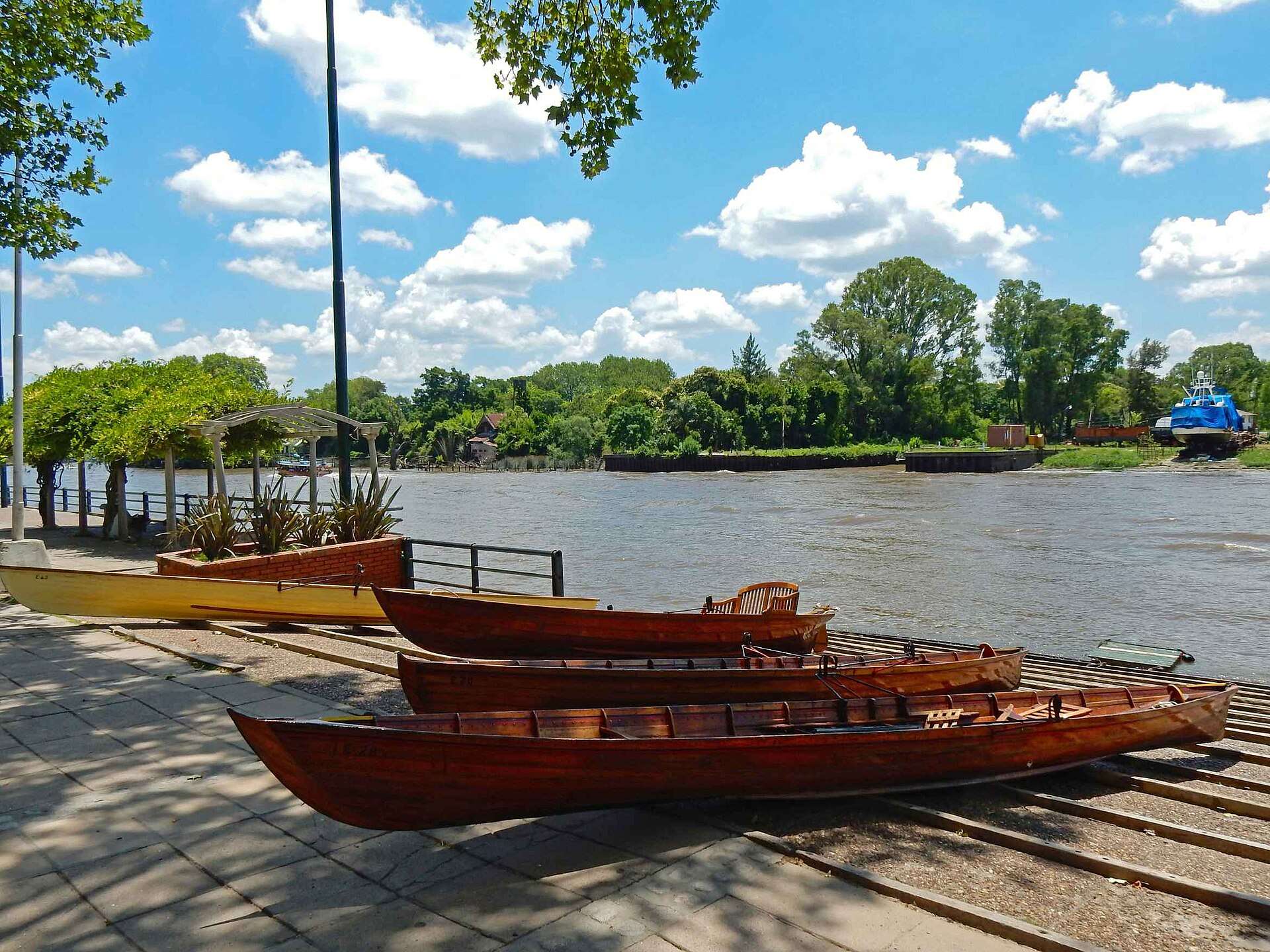
Book a delta circuit or a water-bus fare first, per the alarm, then fill the wait: the riverfront walk past the rowing clubs — Tigre’s Victorian boathouses are the architecture nobody expects — and the art museum’s casino splendor. The boat is the heart of the visit: channels narrowing, docks with names instead of addresses, kids commuting by launch, the city impossibly absent twenty minutes from its edge. Islands with restaurants and swimming recreos invite the longer version — confirm your return boat’s time with the operator, not your optimism. Back ashore, Puerto de Frutos handles the shopping instinct, and the paseo Victorica’s parrillas handle the late lunch it created.
When to go
Spring and autumn are the delta’s seasons — green, mild, mosquitoes off duty. Summer works with sunscreen and a swimming stop built in; the humidity is real and the islands are its home address. Winter thins boats and crowds into a moody, low-water quiet with its own partisans. And the Sunday question from the alarm is genuine: weekends double the market, the boats, and the queues — porteños love Tigre too, which is the endorsement and the warning in one.
Frequently Asked Questions
Tour boat or water-bus?
The one-hour tourist circuit is the efficient sampler with commentary. The lanchas colectivas are transport, not tours — cheaper, more local, and better if you’re heading to a specific island lunch. First visit, the circuit; second visit, the water-bus.
Can I get off on an island?
Yes — recreos and island restaurants receive day visitors by water-bus or their own launches, with swimming, lawns, and long lunches the standard format. Fix the return time when you land; the delta does not run on impulse.
Is Tigre worth it against San Telmo or Recoleta days?
It’s the only day that takes you off the continent’s edge and into the delta’s parallel world — a different Argentina entirely. As a contrast to the city’s stone, nothing else on the SUBE card competes.
What is the Tren de la Costa?
A light-rail ribbon along the riverbank suburbs with stations built as promenades — slower and prettier than the Mitre. Ride it one way for the scenery and the San Isidro stop; take the Mitre when time matters.
Anything to eat specifically?
Parrilla on Paseo Victorica facing the river is the Tigre lunch; the market adds churros and river-town snacks. On the islands, the recreo asado is the full experience — book ahead on summer weekends.